How to Love the Lord Your God – Part 2, “Soul”
A while ago I explained why I don’t think “heart” is an accurate translation in “Love the Lord your God with all your heart [and] all your soul,” from Matthew 22:37, Mark 12:30, and Luke 10:27, quoting Deuteronomy 6:5. The reason was that the original referred to both emotion and intellect, while “heart” in English is generally only the former.
I think that “soul” is an even worse translation. Here’s why.
“Soul” in English
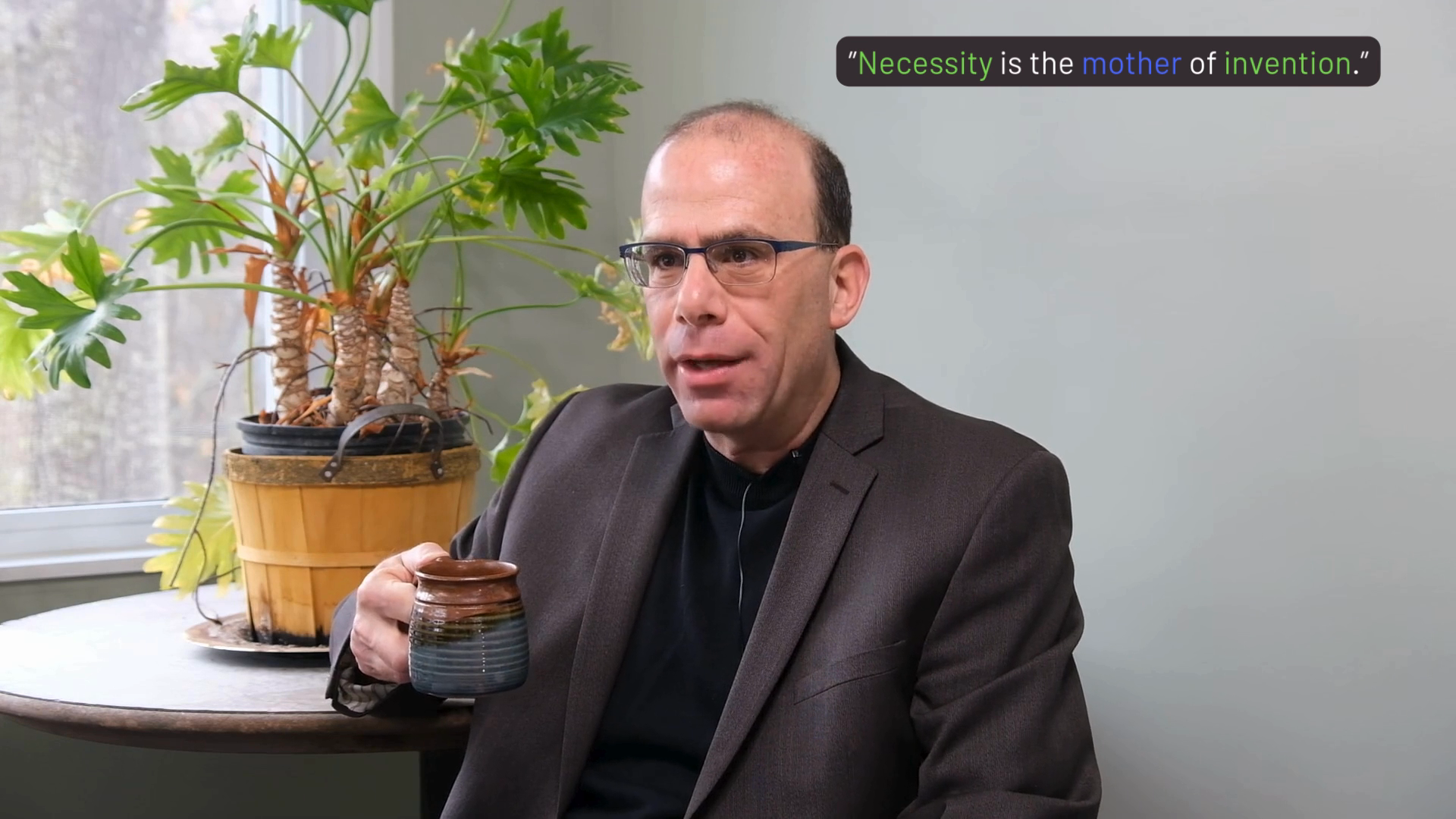
| “ | there are two parts to being human, our internal processes and our physical stuff” |
Most people don’t agree on what exactly a “soul” is in English. For some, it’s what lives on after death. For others, it has more to do with lifeforce. Nonetheless, most people do agree on certain aspects: the soul is intangible, for example, and there’s something mystical or unworldly about it. And in this regard, it’s worthwhile to point out that even those who don’t think people have souls know what “soul” means. (I’m reminded of J.-E. Renan: O Seigneur, s’il y a un Seigneur ; sauvez mon ame, si j’ai une ame – “O Lord, if there is a Lord, save my soul, if I have a soul.”) So in spite of disagreement about some things, “soul” does have a core meaning common to most English speakers.
We do have a few expressions in English that veer off in other directions, most notably the metonymic use of “soul” for “person,” as in, “17 souls were lost at sea.” (Also, it’s been widely observed that “bless her soul” in certain dialects really just means, “I’m about to say something nasty about her.”) But these are exceptions. The “soul” in English is intangible, amorphous, and perhaps eternal.
“Soul” in the Bible
Hebrew
The English “soul” is supposed to translate the Hebrew word nefesh (also commonly spelled nephesh) but the Hebrew nefesh isn’t at all what we would call a “soul.”
The first sign that things have gone wrong comes from Leviticus. In 7:18, for example, we see that the nefesh does the eating. We see the same thing in 7:27, which warns about any nefesh that eats blood. Certainly it’s the body, not the soul, in English that does the eating and drinking. But in Hebrew it’s the nefesh.
Additionally, we read in Leviticus 17:11 that “the nefesh of flesh is in the blood … it is blood that atones for the nefesh.” Though opinions differ about where the soul in English might be located, it’s pretty clearly not in the blood. Yet that’s exactly where the nefesh lies in Hebrew. Furthermore, we actually see a close connection here between nefesh and blood.
Leviticus 24:17-18 gives us more information. There, we read that anyone who wounds the nefesh of a person will be put to death, and anyone who wounds the nefesh of an animal will pay for it, “a nefesh for a nefesh.” These passages are clearly not about what we would call “souls” in English. They are about the physical body.
The parallelism in Psalm 63:1 (“my nefesh thirsts for you; my flesh faints for you,” NRSV) helps us further. There nefesh is in parallel with basar, “flesh.” So in addition to having something to do with the blood, we learn specifially that nefesh is related to the flesh.
Finally, in I Kings 17:19-22, we learn that the nefesh is related to the “breath.” Elijah revives a dead boy by laying him down (17:19), stretching himself over the boy (17:21) and then the nefesh “of the child came into him again, and he revived” (NRSV). The passage is almost certainly about mouth-to-mouth resuscitation. (Elijah’s disciple, Elisha, also knew how to perform mouth-to-mouth, as we read in II Kings 4:8, where Elisha puts his mouth on the mouth of a dead child to revive him.)
So the nefesh is related to the blood, to the flesh, and — we now see — to the breath.
In short, nefesh was the tangible aspects of life, that is, everything that could be touched: the blood, the flesh, and the physical breath. This is why “soul” is such a disasterous translation for nefesh. “Soul” in English is precisely that which is intangible, while nefesh is the opposite.
Greek
The situation in Greek — where we find psuche (also commonly transliterated psyche) for the Hebrew nefesh — is more complicated.
Like its Hebrew counterpart, the Greek psuche can refer to the physical aspects of life. In Matthew 6:25, for example, the psuche does the eating and drinking. But in Matthew 10:28, we see psuche used in contrast to the phsycial body.
So the Greek word is used both in the Hebrew sense of nefesh and in the English sense of “soul.” (Actually, the English word is probably used in the Greek sense, but it works out the same.) Still, we can be fairly certain that in the context of kardia (“heart,” but not really), psuche in Greek matches what nefesh means in Hebrew, both because the quote is from Hebrew, and for a more fundamental reason:
“Love with All Your Heart and Soul”
We’ve already seen that the word translated as “heart” really refers to emotions and intellect together. Now we see that the word translated as “soul” refers to the physical aspects of life.
Taken together, they form a nice pair: the first word refers to the intangible aspects of being human, and the second word to the tangible aspects. The concepts are just like software (“heart”) and hardware (“soul”) for computers, but applied to people. We don’t have words like these in English, but I think it’s fascinating that they did in antiquity, as if to say that there are two parts to being human, our internal processes and our physical stuff.
The commandment is to love God with both.
[Update: The third part in this series is here.]
January 11, 2012 Posted by Joel H. | translation practice | Bible, translation, semantics, Bible translation, metaphor, nephesh, Matthew 22:37, Mark 12:30, Luke 10:27, Deuteronomy 6:5, heart, soul, ontology, nefesh, psyche, psuche | 34 Comments
About
God Didn’t Say That is an online forum for discussing translations, and mistranslations, of the Bible.
Dr. Joel M. Hoffman is the chief translator for the ten-volume series My People’s Prayer Book and author of And God Said: How Translations Conceal the Bible’s Original Meaning. He holds a PhD in theoretical linguistics and has taught at Brandeis University and HUC-JIR in New York City. He presents widely to churches, synagogues, and other groups. more…
Have a question or a topic you’d like addressed? Click on “About” here or to the far upper right and leave a comment.
From AGS-
Top Posts
Blogroll
My Books
Subscribe!
Search for:
-
Recent Comments
Of Note
Archives
- May 2012 (4)
- March 2012 (1)
- February 2012 (3)
- January 2012 (6)
- December 2011 (1)
- November 2011 (4)
- October 2011 (5)
- September 2011 (3)
- July 2011 (1)
- June 2011 (4)
- May 2011 (4)
- April 2011 (7)
- March 2011 (6)
- February 2011 (3)
- January 2011 (6)
- December 2010 (2)
- November 2010 (9)
- October 2010 (7)
- September 2010 (3)
- August 2010 (3)
- July 2010 (8)
- June 2010 (6)
- May 2010 (6)
- April 2010 (9)
- March 2010 (15)
- February 2010 (19)
- January 2010 (21)
- December 2009 (21)
- November 2009 (23)
- October 2009 (39)
- September 2009 (45)
Categories
- announcements (13)
- article review (2)
- audio (1)
- Bible versions (52)
- blog review (1)
- book review (2)
- editorial (1)
- general linguistics (27)
- grammar (4)
- meta (11)
- Off Topic (19)
- Q&A (30)
- translation applications (1)
- translation challenge (13)
- translation practice (145)
- translation theory (164)
- Translation Traps (14)
- Uncategorized (4)
- using Bible translations (7)
- video (4)
Tags
And God Said anthropos Bible Bible translation Bible versions CEB CEV ESV gender Genesis Genesis 1:1 God's Word grammar Greek Greek grammar Hebrew Hebrew grammar idiom imagery Joel M. Hoffman JPS KJV linguistics LXX Matthew metaphor Modern Hebrew NAB NIV niv2011 NJB NLT NRSV poetry sarx semantics Song of Solomon Song of Songs syntax Ten Commandments The Message TNIV translation translation theory Translation Traps
Site info
God Didn't Say ThatTheme: Customized Andreas04 by Andreas Viklund. Blog at WordPress.com.